Top-rated campgrounds near Caithness

1. Sinclair Bay Lodges
Caithness camping guide
Where to go
East Coast
As you leave the seaside villages of Sutherland behind and continue north into Caithness, the coastal road dips and dives along sheer sea cliffs, especially at Berriedale Braes. The views from the hairpin turns are a treat for everyone but the driver. Castles dot the coastal cliffs and span centuries of Scottish history back to the 1100s. Detour into Lybster to walk along the harbour and visit the local heritage centre. As you pass through the town of Wick, resupply then head out to enjoy a coastal walk to Noss Head Lighthouse.
Thurso and Scrabster
Whether you’ve just taken the train through four hours of emptiness from Inverness or driven the rural coastal circuit, the town of Thurso seems to spring up out of nowhere. It’s a good base to stock up on everything you’ll need to go camping for a few days—plus, there’s an excellent waterfront campsite right in town. Thurso is a cold-water surfing mecca and attracts board riders from around the world, while next door, Scrabster is the main ferry port on the North Coast for Orkney, where a large Viking-painted vessel waits to whisk visitors to the islands across the Pentland Firth.
North Coast from Dunnet Head to Gill’s Bay
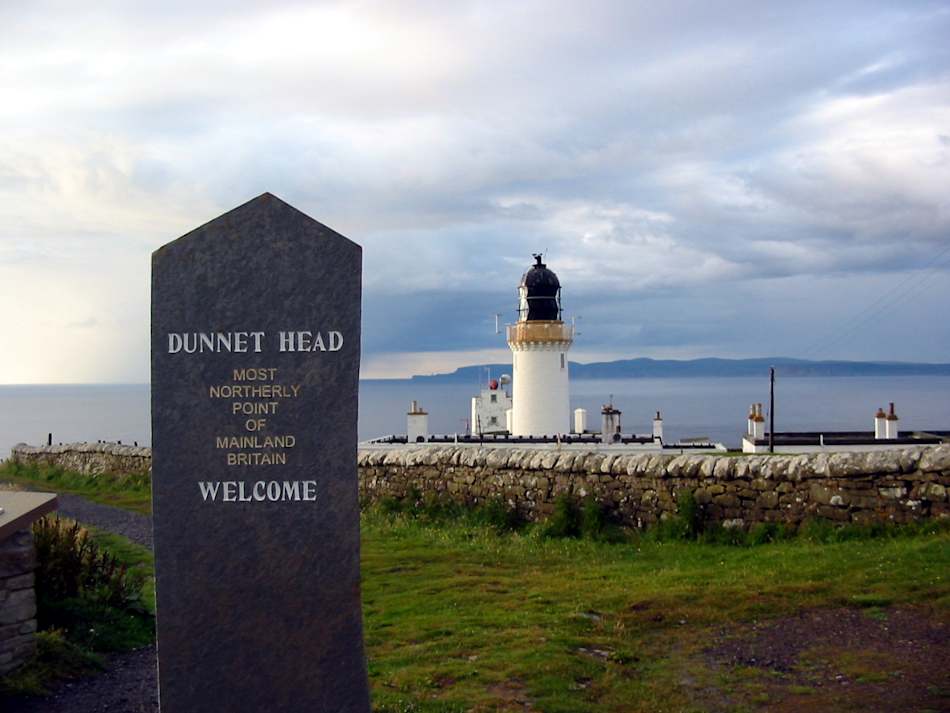
Dunnet Head is the most northerly point of mainland Britain. A strenuous 10-mile clifftop walk rewards with views out to the Orkney island of Hoy on a clear day. Nearby is the Castle of Mey, the favored escape of the Queen Mother, who purchased the castle in 1952 after her husband, King George VI’s, death. Just down the road is another ferry to Orkney at Gill’s Bay, which transports travellers to St Margaret’s Hope on South Ronaldsay.
John O’ Groats and Duncansby Head
Situated at the northeast point of Scotland, John O’Groats is the most northerly village in mainland Britain. Chances are in the warmer months you’ll pass a number of cyclists as they complete the infamous Lands End to John O’Groats cross-country challenge. From the car park, walk the five-mile coastal path around Duncansby Head, turning from the Pentland Firth down the North Sea coastline where magnificent sea stacks await.