

Hipcamp’s 2026 Superbloom Forecast
Where to Camp
for the 2026
Superbloom.
Early signs point to California’s biggest superbloom in a decade, so we ran the data to predict when the blooms will hit—plus, where to go camping to see them.
Data from iNaturalist · By Hipcamp
California's 2026 Superbloom Forecast
We analyzed 150,000+ iNaturalist observations (2021–2025) to map how wildflowers typically appear across the state. Paired with this winter's weather patterns, the forecast is clear: Blooms begin in the low deserts in February, then move north and upslope through spring. Here's how to catch the 2026 superbloom: where to look, when to go, and the best campsites nearby.
The Desert Wakes Up First
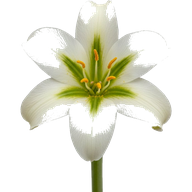
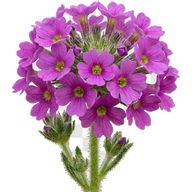
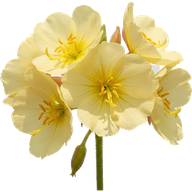
Two hours east of San Diego, Anza-Borrego is consistently home to California’s first bloom. Head off of dusty Henderson Canyon Road to spot mats of pink-purple sand verbena alongside desert lilies and big white evening primrose. Morning visits mean more flowers—some species close up in the afternoon.
February to mid-March · Free day use · Arrive early on weekends
The Desert Floor Lights Up
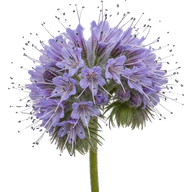
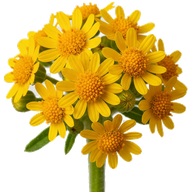
Death Valley doesn’t bloom every year, but solid winter rain transforms the low-elevation Badwater Road with dense patches of desert gold (a small, bright yellow sunflower relative), purple phacelia, and the translucent white gravel ghost. Check the park’s Wildflower Update for the latest conditions.
Mid-February to early April · $30 vehicle entry · Best at low elevations
Fire Followers Line the Coast
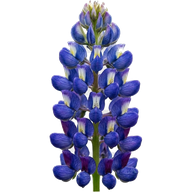
The Santa Monica Mountains north of LA—home to Malibu Creek, Point Mugu, and Topanga state parks—can erupt with “fire follower” blooms after recent burns like the 2025 Palisades Fire. Look for rare fire poppies alongside mariposa lilies and lupine across coastal grasslands and oak woodlands.
Early March to April · Free (most areas)
Peak Poppy Season
Just 90 minutes from LA on the edge of the Mojave, Antelope Valley is California’s most reliable poppy destination. When conditions align, entire hillsides turn orange with poppies, while bright yellow goldfields fill the gaps between. You can camp right on the park border to visit early, when blooms are open.
Mid-March to May · $10 parking · No dogs on trails
Native Daisies Arrive
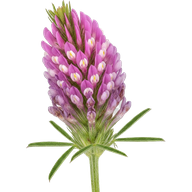
Remote and road-trip ready, Carrizo Plain is California's largest remaining native grassland—and a superbloom star, especially in 2026. Yellow daisies coat the hills, goldfields carpet the valley floor, and pink-purple owl's clovers create striking striped bands across the plain. Expect gravel roads and no cell signal.
Late February to early April · Free · High-clearance vehicle recommended
Waterfalls and Wildflower Meadows
The North Table Mountain Ecological Reserve near Oroville is a volcanic mesa where wet springs bring vivid blooms and seasonal waterfalls that flow over mesa edges. Here meadows fill with sky lupine (short blue-purple spikes), bright yellow goldfields, and dense mats of yellow edging the waterfall pools. It’s unlike any other bloom site in the state.
Late March to May · $6 CDFW Lands Day Pass · Unfenced mesa edges
2026 Superbloom Hotspots
Five years of data, one consistent pattern—and 2026 is erupting with above-average blooms. Hit 'Next' to see all the destinations we're tracking this spring.
2026 Superbloom Destinations at a Glance.
Southern California
Anza-Borrego Desert
Early February to mid-March
Desert Lily, Sand Verbena, Primrose
Free day use; high traffic at Henderson Canyon.
Death Valley NP
Mid-Feb to early April
Desert Gold, Phacelia, Gravel Ghost
$30 entry fee. Best at low elevations (Badwater Rd).
Diamond Valley Lake
March 1 to mid-April
Blue Arroyo Lupine, CA Poppies
$11 parking + $4/person. Wildflower Trail opens 3/1.
Santa Monica Mtns
Early March to April
Fire Poppies, Mariposa Lily, Lupine
Free (mostly). Focus on “fire follower” zones.
Antelope Valley Reserve
Mid-March to May
California Poppies, Goldfields
$10 parking. Strictly no dogs on trails.
Chino Hills SP
Mid-March to May
Wild Hyacinth, Poppies, Bush Mallow
$5–$10 fee. Check for “Bane Canyon” closures.
Joshua Tree NP
Late March to April
Desert Dandelion, Canterbury Bells
$30 entry fee. Best near Cottonwood entrance.
Figueroa Mountain
April to early May
Chocolate Lily, Sky Lupine, Buttercups
Adventure Pass ($5) required for parking.
Northern California
Carrizo Plain NM
Late Feb to early April
Hillside Daisies, Goldfields, Phacelia
Free. Gravel roads; high-clearance vehicles advised.
Mount Diablo SP
Late Feb to April
Wallflowers, Poppies, Monkey Flowers
$10 vehicle fee. Very limited weekend parking.
North Table Mountain
Late March to May
Sky Lupine, Goldfields, Yellow Carpets
$6 CDFW Lands Day Pass.
Mt. Tamalpais SP
April to May
Calypso Orchids, Douglas Iris
$8 vehicle fee.
Folsom Lake SRA
April to May
Dense Blue Lupine (Lupinus albifrons)
$12 parking fee. Peak at Beals Point/Granite Bay.
Leave No Trace.
It's of the utmost importance that hikers only go to areas open to visitors and stay on trail. Be mindful of locals and the natural habitat where you're spending time. We strongly recommend adhering to Leave No Trace and Leave it Better principles.
Plan Your Bloom Trip.
2026 is your shot to see the best California wildflower display in 10 years. Whether you chase the first desert lilies in February or the last lupine meadows in May, a well-timed camping trip puts you front row for one of nature's best shows. Check out our top tips for a stress-free trip.
Find your superbloom siteTop Superbloom Destinations.
- Anza-Borrego Desert State Park
- Death Valley National Park
- Carrizo Plain National Monument
- Santa Monica Mountains NRA
- Antelope Valley Poppy Reserve
- North Table Mountain
- Joshua Tree National Park
- Mount Diablo State Park
- Hungry Valley SVRA
- Diamond Valley Lake
- Chino Hills State Park
- Figueroa Mountain
- Mount Tamalpais State Park
- Folsom Lake SRA
Enjoying This Forecast?
Support important community science work with iNaturalist by recording your own observations.
Start contributing